
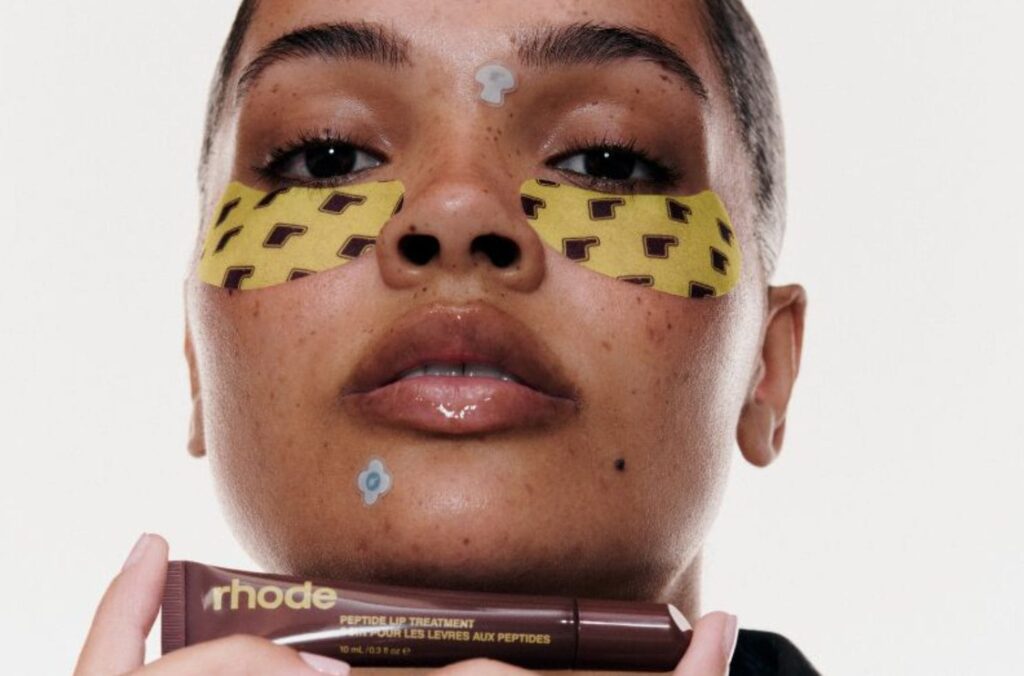
The brand is Rhode, founded by Hailey Bieber. The product is called Spotwear. And Rhode’s Spotwear marketing strategy is something every marketer, founder, and business student should study closely. Here is exactly how they did it.
Step 1: Rhode Built Demand Before Building the Product
Most brands build a product and then search for demand. Rhode did the opposite — and it worked.
When Spotwear finally launched, the internet’s reaction was not “interesting innovation.” It was “finally.” The product had already been demanded before it existed. That is not luck — it is a long game.
Marketing takeaway: Create the gap before you launch. Let your audience feel the absence of your product first. Hailey was not just wearing patches — she was writing Rhode’s next product brief, live, in front of millions, for free.
Step 2: They Spent Two Years Getting the Product Right
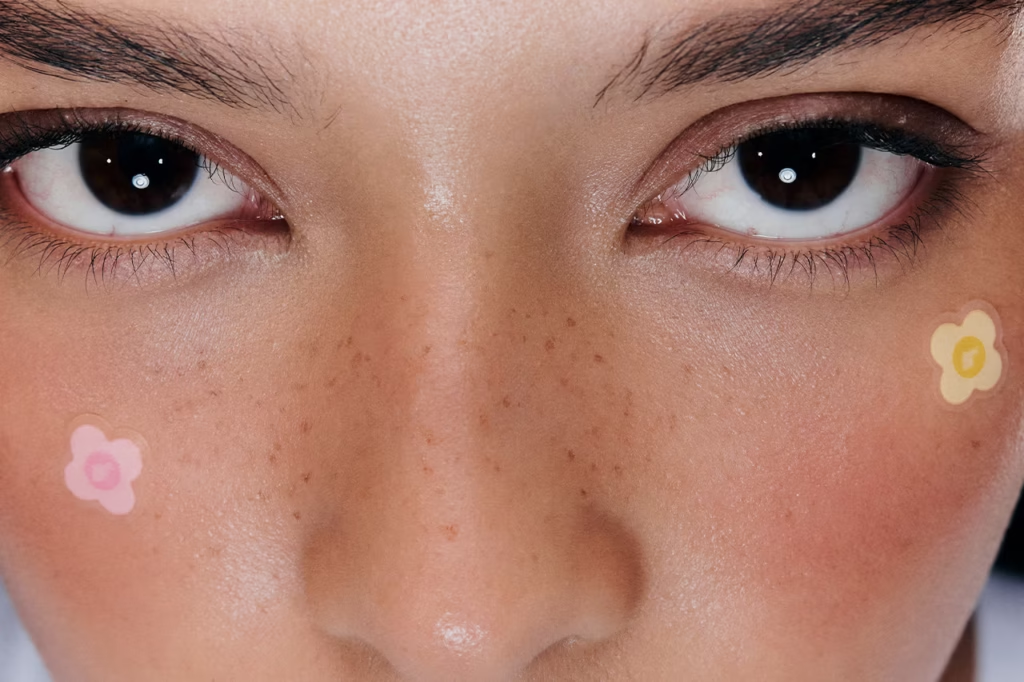
Hypebae confirmed that the patches are made from 100% hydrocolloid. They are waterproof, sweat-proof, and clinically tested to reduce the appearance of spots by drawing out oil and shielding skin from outside irritants.
Marketing takeaway: Marketing cannot save a bad product. Rhode’s real advantage is quality. Two years of development means every influencer who reviews Spotwear will genuinely like it — and that is the only kind of word-of-mouth that actually works.
Step 3: The Collaboration with Justin Bieber Felt Completely Natural
Many brand collaborations feel forced. Rhode’s felt organic — because it was.
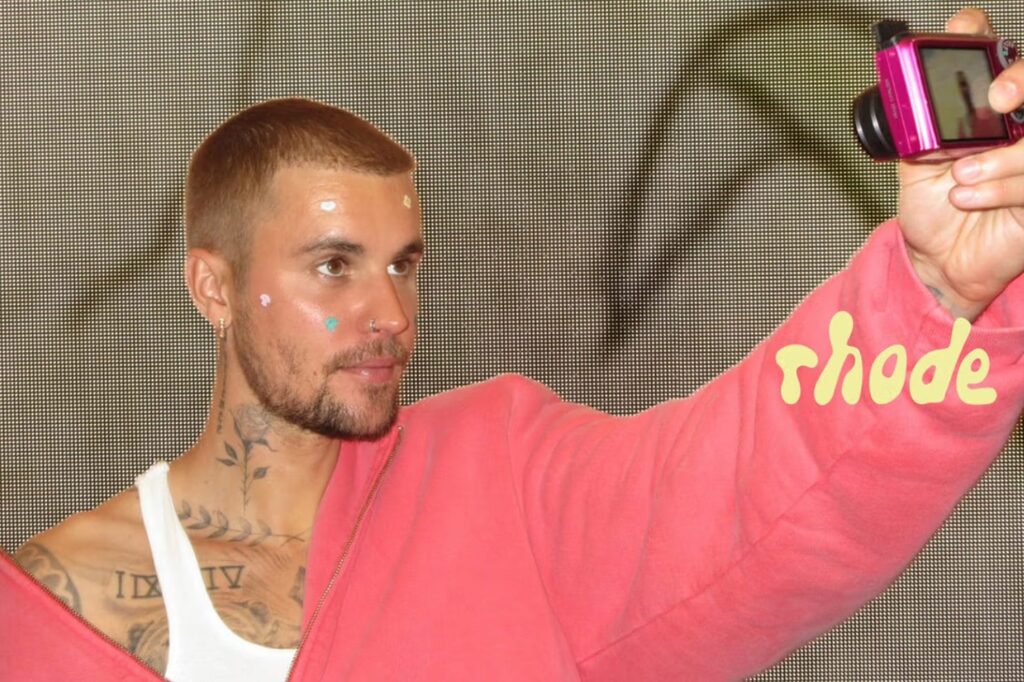
As Hailey told WWD directly: “It’s something that felt the most organic. If there was ever going to be a collaboration between him and I, it couldn’t be a better product. And the timing around Coachella couldn’t be better.”
Marketing takeaway: Your best brand advocate is someone who would buy your product anyway. Forced endorsements read like ads. Genuine ones read like recommendations. Audiences can always tell the difference.
Step 4: The Launch Announcement Looked Like a Couple’s Selfie
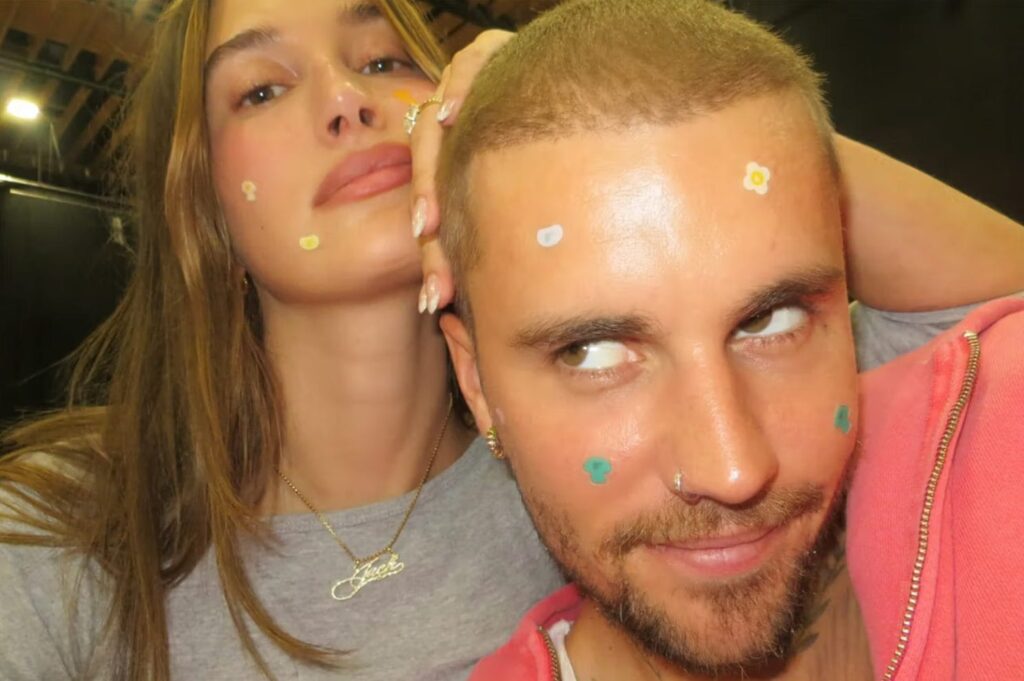
Rhode did not release a campaign film. They did not send a press release. Instead, Hailey posted a selfie with Justin, both wearing the patches, with a caption that read: “hello spotwear!!!! @rhode pimple patches designed in collaboration with my loveeee @lilbieber launching 4/13 at 9am pst.”
Reality Tea documented the post and the flood of comments that followed. Nobody scrolls past a photo of the Biebers. As a result, the product was embedded inside content people already wanted to see — not sitting alone in an advertisement.
Marketing takeaway: Bury your marketing inside content people are already seeking out. A couple’s selfie outperforms a product photo every time. Make your launch a moment worth watching, not just a message worth reading.
Step 5: The Coachella Timing Was Deliberate, Not Lucky
The product launched at Rhode’s own pop-up event in the desert — Rhode World — just hours before Justin Bieber headlined the Coachella main stage in front of one of the largest crowds in the festival’s 25-year history, according to WWD.
In addition to that built-in reach, every article covering his headliner set and every TikTok from the festival weekend became secondary promotion for Spotwear at no extra cost. The Fashion Network also reported that Rhode phased the retail rollout: the product went live D2C first, then hit Sephora US and Canada on April 21st. That extended the media narrative to nearly two weeks instead of burning out in 24 hours.
Marketing takeaway: Timing is a multiplier. The exact same product launched on a random Tuesday would have sold far less. Position your launch where your audience is already emotionally invested — then let that energy carry you.
Step 6: The PR Box Was Designed to Be Filmed
Rhode’s influencer gifting approach has always been intentional, and Spotwear was no exception.
As SARAL Academy points out, the average influencer receives 10 to 15 PR boxes per month and films about five of them. Rhode boxes get filmed almost every time — because they are built from the ground up as content generators, not shipping containers. The colorful, fun packaging matches the playful shapes of Spotwear perfectly, so the box, the patches, and the influencer’s genuine reaction all form one continuous piece of content. Gemnote also reported that Rhode sends packages to internal team members and partners, building brand love from the inside out.
Marketing takeaway: Your PR box is a content piece — treat it like one. The unboxing experience should be the marketing itself, not something that happens before marketing begins.
Step 7: They Seeded Every Influencer Size, Not Just the Big Names
Rhode’s seeding strategy was wide, not just tall. Lefty.io revealed that Rhode targeted influencers across all size tiers — from mega to micro — with a particular focus on women aged 18 to 34 who favor minimal, effective skincare. Crucially, none of these posts required paid partnership disclosures, which made them feel entirely organic.
On TikTok, micro-influencers noted that consistently tagging Rhode in content was the path to eventually receiving PR packages. The team actively monitors tags and reaches out to relevant accounts.
Marketing takeaway: A two-million-follower creator and a four-thousand-follower creator posting in the same week creates a feeling of omnipresence. Omnipresence builds trust. Seed wide, not just high.
Step 8: The Product Itself Was the Billboard
This is what ties the entire Rhode Spotwear marketing strategy together. Rhode did not position Spotwear as a skincare treatment. They positioned it as wearable skincare — a fashion accessory.
As Hypebae noted from Rhode’s own press release: “Spotwear taps into the community’s desire to be transparent with their connection to the world of Rhode through the ability to wear your items on the go, similar to the Lip Case and Peptide Eye Prep.”
A mushroom-shaped patch on your face at Coachella is not an admission that you have a blemish. It is a style choice. Everyone wearing Spotwear at the festival became a walking piece of user-generated content. The design made people want to be seen in it.
Marketing takeaway: Make sharing something your product naturally produces — not something your marketing has to manufacture. If you are building something, ask yourself: would someone using this product want to be photographed doing so?
The Bottom Line on Rhode’s Spotwear Marketing Strategy
Rhode did not launch pimple patches. They launched a culture that happened to contain pimple patches.
Every piece — the two-year slow-burn teaser, the organic husband collaboration, the couple selfie reveal, the Coachella timing, the camera-ready PR packaging, the wide influencer seeding, and a product people genuinely wanted on their faces at a festival — was part of one cohesive plan.
You do not need a celebrity spouse or a Coachella slot to apply these lessons. What you need is to treat your launch as a cultural moment first, and a product announcement second. The brands that win are not changing culture — they are becoming part of it. Build something worth talking about.