When the airspace closed and thousands were stranded, the world was watching. What happened next was real leadership.
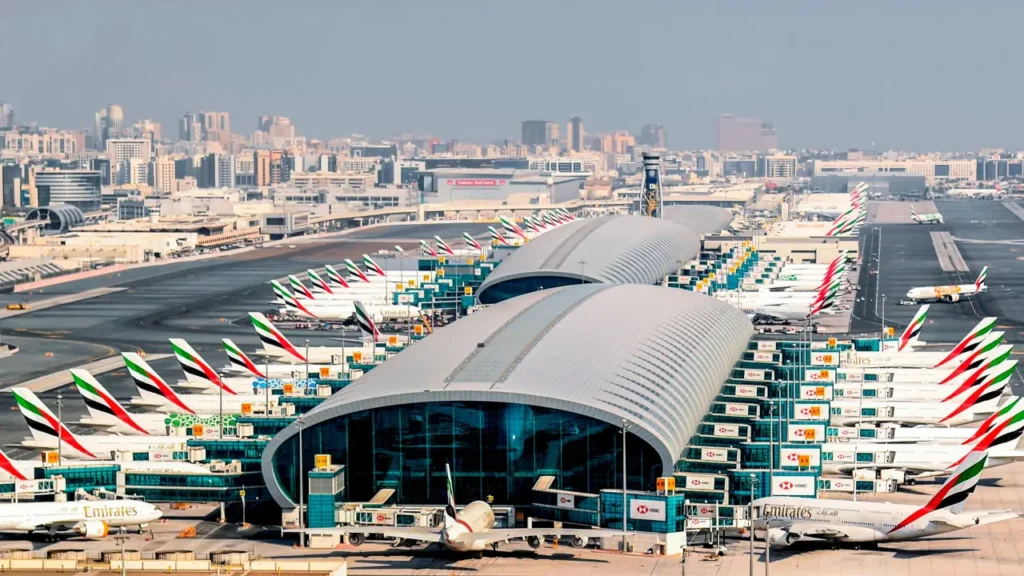
UAE airspace was closed on the morning of 1 March. Emirates halted all departures from Dubai International. Etihad grounded services from Abu Dhabi. In the span of days, the crisis disrupted over 21,300 flights across seven regional airports. — Dubai, Abu Dhabi, Doha, and beyond.
Thousands of travellers — business passengers, tourists, pilgrims — found themselves stranded on planes, cruise ships, in hotels, and at departure gates.
The disruption was not caused by the UAE. But the response? That was their call entirely.
Lesson 1
A leader’s best moments come in crisis
Airspace was reopened in stages, with carefully routed corridors for select airlines. The difference between paralysis and progress is exactly this: movement when others stay still.
The Insight
Great leaders cut through the noise, act decisively, and communicate simply — especially when the situation is most complex.
Lesson 2
Protect people, and they’ll trust you for years
7,000+
Indian nationals assisted
and repatriated
3 days
To organise an emergency
flights from 5 airports
$0
Overstay penalty charged
to stranded visitors
The UAE extended overstay waivers to all visitors and residents unable to travel. In addition, the GCAA directed all airlines to offer free accommodation, food, and rebooking — none of it legally required.
The Insight
A leader earns their highest credibility not by claiming success, but by protecting people when they are not to blame for what went wrong.
Lesson 3
Responsibility builds reputation
“It’s probably the biggest shutdown we’ve seen for years, certainly since the Covid outbreak.” — Paul Charles, CEO, PC Agency
The financial toll ran into the billions — hitting not just stranded passengers, but the cargo networks moving through Dubai and Abu Dhabi every day.These two hubs sit at the intersection of Europe, Africa, and Asia. They cannot afford to be seen as unreliable.
And yet against that backdrop, the UAE’s response — fast, visible, and comprehensive — became the story. Not the closure. The recovery.
The Insight
No advertising budget can buy the reputation built through responsible leadership in an uncertain moment.
Lesson 4
Well-prepared systems signal strong leadership
The GCAA paired its closure announcement with an immediate, plain-language system for rebooking, refunds, and repatriation. Passengers knew exactly what to do.
For example, Air India ran 32 ad hoc flights on 9 March, then added 78 more across nine routes from 10–18 March — opening up over 17,000 seats for stranded travellers.
The Insight
The ability to respond well in a crisis is not proof of good leadership in the moment — it is proof of the framework built long before.
Lesson 5
The essence of leadership is assurance, not power
Schools and universities announced a spring break from 9–22 March, with students returning on the 23rd — a quiet signal of continuity, routine, and normalcy in the face of regional unrest. Leadership as reassurance, not spectacle.
The Insight
Effective leaders do not merely command — they restore confidence. The goal is not to appear in control; it is to make others feel safe enough to carry on.
The Takeaway
- It is not the crisis that makes leaders — it is the crisis that reveals them.
- Trust is never earned in the boardroom. You get it when things hit the fan.
- The ideal leader cannot prevent the storm. They lead people through it.
- When conditions are stable, leadership is invisible. Crisis is when it matters most.
- True leadership is not knowing all the answers — it is keeping people’s hope alive while you find them.