
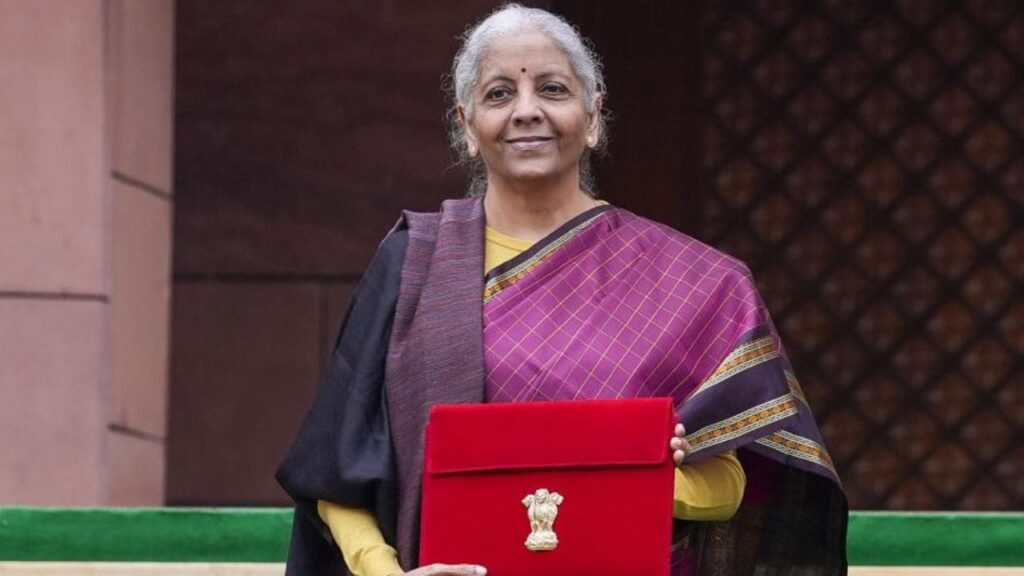
There are moments in a nation’s journey when policy meets possibility, when vision transcends mere paperwork to become a promise of transformation. The Union Budget 2026-27 has delivered precisely such a moment. Finance Minister Nirmala Sitharaman’s announcement of Content Creator Labs in 15,000 schools and 500 colleges across India isn’t just another budget allocation—it’s a declaration of intent, a recognition that creativity is no longer a luxury but an economic necessity.
Let’s be clear: this is big. Very big.
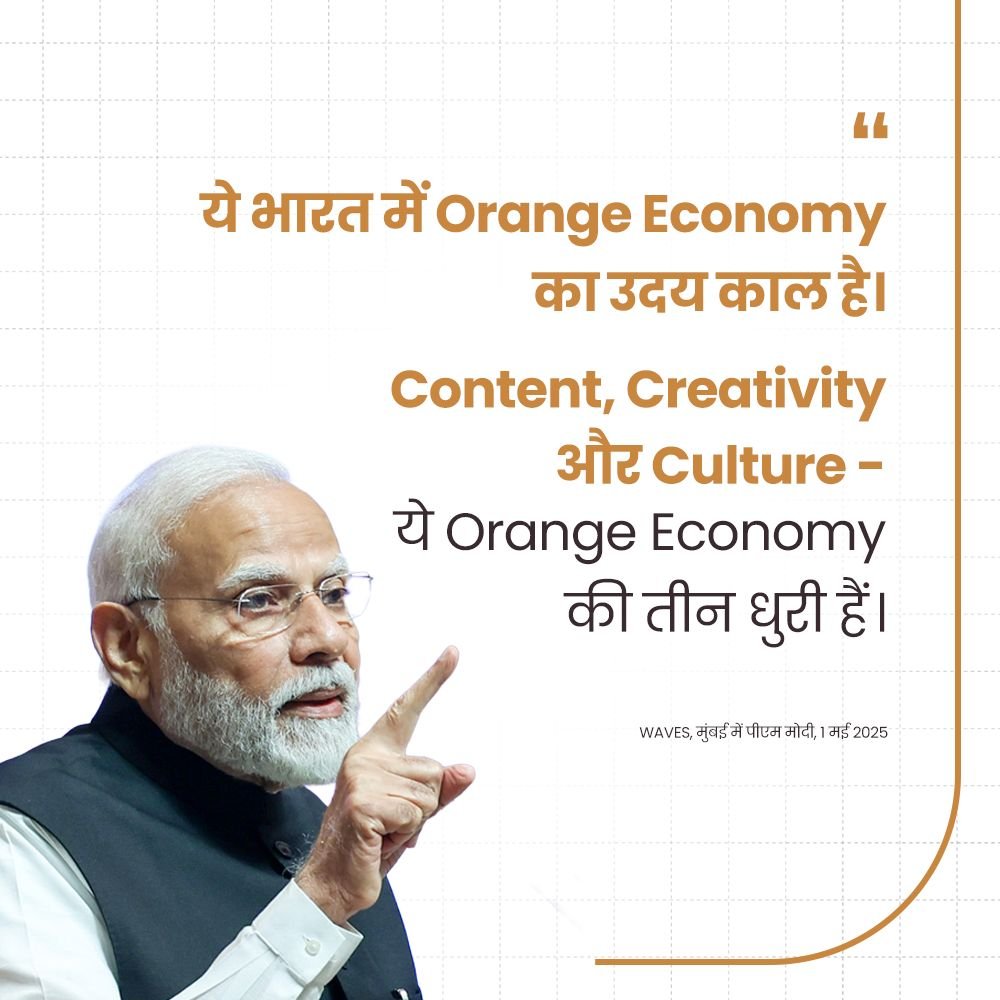
The Orange Economy: India’s New Growth Engine
For too long, we’ve measured progress in steel and concrete, in manufacturing output and agricultural yields. Don’t misunderstand—these remain vital. But the world has changed, and so must our understanding of wealth creation. The “Orange Economy”—encompassing animation, visual effects, gaming, comics, and digital content—represents sectors where ideas are the raw material, imagination is the infrastructure, and creativity is the currency.
The numbers tell a compelling story. India’s Animation, Visual Effects, Gaming, and Comics sector is projected to require nearly 2 million professionals by 2030. That’s not four years away—that’s tomorrow in economic planning terms: two million jobs, opportunities, and two million reasons why this budget announcement matters.
From Shadows to Spotlight: India’s Creative Talent Gets Its Due
Here’s an uncomfortable truth: for decades, Indian creative talent has been the invisible hand behind global blockbusters. Our animators, our VFX artists, our game designers—they’ve been doing the heavy lifting for Hollywood studios, for global gaming companies, for international production houses. They’ve been the engine, but someone else has been driving the car and pocketing the profits.
That equation is about to change.
The establishment of AVGC Content Creator Labs in schools and colleges, supported by the Indian Institute of Creative Technologies in Mumbai, represents a fundamental shift. We’re not just training workers for someone else’s assembly line. We’re nurturing creators who will build their own factories, launch their own IPs, tell their own stories.
Think about what this means. A teenager in a small town in Uttar Pradesh, a student in a government school in Jharkhand, a young person in rural Karnataka—they’ll now have access to the same creative tools and training that were once the preserve of expensive private institutions in metro cities. This is democratization of opportunity at its finest.
The IICT Mumbai Model: Excellence Meets Scale
The Indian Institute of Creative Technologies deserves special mention. Modeled on the lines of our IITs and IIMs, IICT has already partnered with global technology giants—Google, Meta, Microsoft, Apple, NVIDIA, Adobe. These aren’t just names on a memorandum; these are collaborations that bring world-class curriculum, cutting-edge tools, and industry insights directly into the learning ecosystem.
The institute’s temporary campus has already begun operations, and its permanent home at Dadasaheb Phalke Film City in Mumbai is taking shape. But here’s what makes this truly exciting: IICT isn’t staying confined to Mumbai. Through these 15,000 school labs and 500 college labs, the institute’s expertise will radiate across India, creating nodes of creative excellence from Kashmir to Kanyakumari.
Beyond Jobs: Building India’s Cultural Superpower
Let’s zoom out for a moment. This initiative isn’t just about employment, though two million jobs is nothing to sneeze at. It’s about something more profound: India’s soft power.
We live in an age where content is power. The stories we tell, the games we create, the characters we design—these shape perceptions, influence cultures, and define global narratives. When an Indian animation studio creates content that captivates global audiences, when an Indian gaming company produces the next viral sensation, when Indian creators develop intellectual property that becomes a global franchise—that’s when India doesn’t just participate in the global creative economy, it leads it.
The Economic Survey 2025-26 has recognized creativity-led sectors as emerging drivers of employment, urban services, and tourism. The “concert economy,” the entertainment industry, the digital content ecosystem—these aren’t frivolous pursuits. They’re economic powerhouses that can rival traditional industries in their contribution to GDP.
From Tier-3 Cities to Global Stages
Here’s where this initiative becomes truly revolutionary. By placing these labs in secondary schools and colleges across India, not just in metropolitan hubs, we’re essentially saying that talent is evenly distributed even if opportunity hasn’t been. We’re acknowledging that the next great animator could be studying in Bhubaneswar, the next gaming genius might be in Indore, the next VFX wizard could be in Coimbatore.
This geographical spread has another benefit: it prevents the concentration of the creative economy in just a few cities. It builds creative capability at the grassroots, creating employment opportunities in smaller towns and cities, preventing the brain drain that has plagued so many sectors.
The Skills Gap: Bridging Theory and Practice
One of the most critical aspects of this initiative is its practical focus. These aren’t theoretical classrooms where students merely read about animation or gaming. These are Content Creator Labs—spaces equipped with the tools, software, and guidance needed to actually create.
Students will get hands-on experience in digital storytelling, learn industry-standard software, understand production workflows, and most importantly, build portfolios while still in school or college. By the time they’re ready to enter the workforce, they won’t just have degrees; they’ll have demonstrable skills and real projects to their credit.
This is the kind of education system the 21st century demands—one that doesn’t just impart knowledge but builds capability, that doesn’t just prepare students for jobs but equips them to create opportunities.
The Entrepreneurship Angle: From Job Seekers to Job Creators
Here’s perhaps the most exciting aspect: this initiative isn’t just about creating employees for the creative industry. It’s about fostering entrepreneurs. The creator economy thrives on individual talent and small teams. A group of skilled animators can form a studio. A handful of game developers can launch a startup. A creative individual with the right skills can build a following, monetize their content, and become their own enterprise.
The budget announcement recognizes this reality. By building skills at scale, we’re not just filling a talent pipeline for existing companies—we’re potentially creating thousands of new startups, new studios, new creative enterprises. We’re building an ecosystem where Indian youth don’t just work for the creative economy; they become the creative economy.
The Timing Is Perfect
This initiative comes at a particularly opportune moment. The global content consumption patterns have shifted dramatically. Streaming platforms have an insatiable appetite for content. The gaming industry has grown larger than the film and music industries combined. Digital content creation has become a legitimate and lucrative career path.
India, with its demographic advantage—a young population, increasing digital penetration, improving internet infrastructure—is perfectly positioned to capitalize on these global trends. Add to this our rich cultural heritage, our tradition of storytelling, our linguistic diversity, and you have all the ingredients for a creative powerhouse.
Challenges? Certainly. Insurmountable? Hardly.
Let’s not pretend this will be easy. Rolling out labs across 15,000 schools and 500 colleges is a massive logistical challenge. Ensuring quality across such a vast network requires careful planning and execution. Training teachers, maintaining equipment, keeping curriculum updated with rapidly evolving technology—these are real concerns.
But here’s the thing about India: we’ve done difficult things before. We built a digital payments infrastructure that has become the envy of the world. We launched a space program that put a probe on Mars. We conducted the world’s largest vaccination drive. When we commit to something at scale, when we bring our characteristic jugaad and innovation to bear, we find ways to make things work.
The Road Ahead: From Promise to Reality
The announcement has been made. The allocation has been promised. Now comes the hard part: execution. The success of this initiative will depend on several factors:
Quality of infrastructure: Labs need to be equipped with modern tools and technology, regularly updated to keep pace with industry standards.
Teacher training: We need educators who are themselves skilled in these domains, or at least enthusiastic partners in the learning journey.
Industry integration: Regular inputs from industry, internship opportunities, and pathways to employment will be crucial.
Flexibility and iteration: The creative tech field evolves rapidly. The program must be agile enough to adapt.
But if we get this right—and there’s every reason to believe we will—the payoff is enormous. We’re talking about transforming India’s economic landscape, creating millions of high-quality jobs, building global brands, exporting culture and creativity, and in the process, giving our youth the tools to dream bigger and achieve more.
A Personal Note: Why This Matters
Beyond the numbers and the policy announcements, there’s something deeply moving about this initiative. It’s an acknowledgment that every child has creative potential. It’s a recognition that in every classroom, there might be a future Pixar director, a gaming innovator, a storyteller whose work will move millions.
For too long, creative pursuits have been seen as hobbies, as backup plans, as things you do if you “don’t make it” in engineering or medicine. This budget announcement sends a different message: creativity is valuable, creative skills are marketable, and creative careers are legitimate and lucrative.
That’s a cultural shift as much as an economic one, and its ripple effects will be felt for generations.
The Verdict: Orange is the New Gold
Finance Minister Sitharaman called it the Orange Economy. Perhaps we should call it the Golden Opportunity. Because that’s what this represents—an opportunity for India to claim its rightful place as a creative superpower, an opportunity for millions of young Indians to build careers in fields they’re passionate about, an opportunity for India to export not just services and goods but stories, games, and content that captivate global audiences.
The labs will be set up. The training will begin. The first cohorts will graduate. And somewhere in that process, in some school labs in a tier-3 city, a young person will create something extraordinary. They’ll tell a story that needed to be told, design a game that brings joy to millions, craft an animation that moves hearts across continents.
And when that happens—when Indian creativity isn’t just participating in the global conversation but leading it—we’ll look back at this budget announcement as the moment when everything changed.
The Orange Economy isn’t just coming. It’s already here. And India is ready to squeeze every drop of opportunity from it.
The future is creative and digital. The future is now. And with 15,000 Content Creator Labs lighting up across India, that future is brighter—and more colorful—than we ever imagined.