
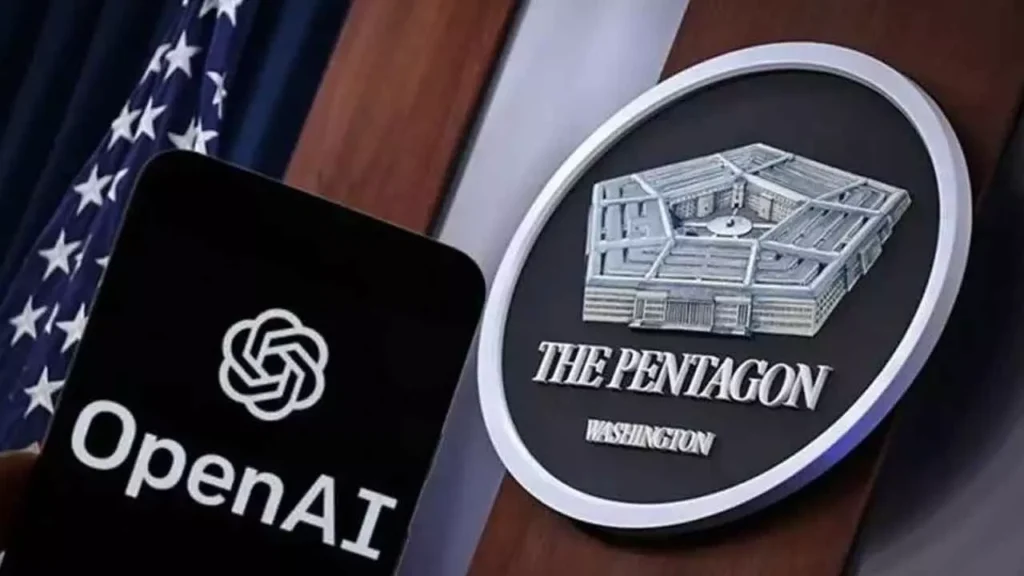
Sparked 2.5 Million Uninstalls
The Deal That Shook the AI World
On February 28, 2026, at around 4 PM EST, OpenAI CEO Sam Altman posted a tweet that would ignite the most dramatic user revolt in the short but turbulent history of AI chatbots.
To many observers, those words sounded measured and even responsible. But to a significant portion of ChatGPT’s own user base — particularly its young, politically liberal core — the announcement landed like a grenade.
Within hours, #CancelChatGPT was the number one trending topic across multiple social platforms. ChatGPT app uninstalls spiked sharply. And Claude quietly, then suddenly, surged to the top of the App Store charts.
The Day Before: Anthropic Said No
The Department of Defense had reportedly offered Anthropic a $200 million contract to access its AI systems. Amodei declined. His reasoning was unambiguous:
— Dario Amodei, CEO of Anthropic
Reports suggest the DoD had pressured Anthropic to loosen its ethical restrictions or risk losing the contract entirely. Anthropic walked away — making it the last major AI company to refuse direct military work of this kind.
Then, mere hours later, OpenAI stepped in to fill the gap.
The Contract Clause That Caused the Controversy
OpenAI’s agreement with the Pentagon included language that permitted the DoD to use its AI for:
“any legal and authorized uses, compliant with all relevant laws, operational requirements, and approved standard operating procedures and safety mechanisms.”
- Domestic mass surveillance programs
- Autonomous weapons systems that select targets without direct human oversight
- Facial recognition tools used to track citizens
These were not fringe concerns. They became the three central accusations powering the boycott that followed.
72 Hours That Rewrote the AI Leaderboard
February 28 — The Boycott Goes Live
The same day Altman’s tweet went out, QuitGPT.org launched. The site’s headline was blunt: “CHATGPT TAKES TRUMP’S KILLER ROBOT DEAL. IT’S TIME TO QUIT.”
March 3 — Protests Hit the Streets
March 21 — A Planned March on Big Tech
The Numbers: What 2.5 Million Looks Like
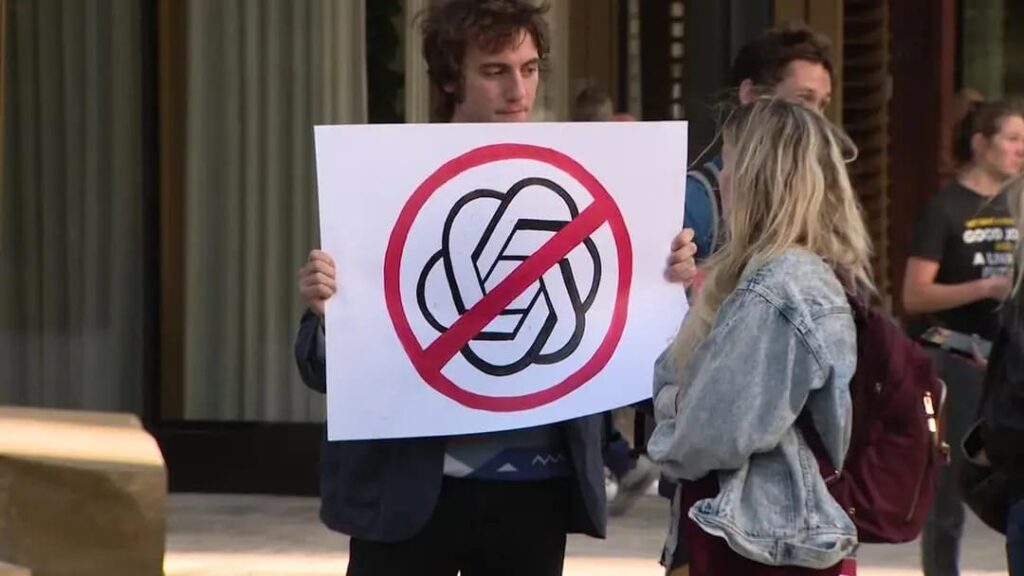
According to QuitGPT.org, within days of the boycott launching, over 2.5 million people had taken at least one of the following actions:
- Cancelled their ChatGPT subscription or account
- Pledged to stop using ChatGPT
- Shared boycott messaging on social media
- Registered on QuitGPT.org
The social media footprint was equally striking:
- QuitGPT’s Instagram account gained 10,000 followers within days of launch
- A Reddit post titled ‘Cancel and Delete ChatGPT!!!’ collected over 30,000 upvotes
- ChatGPT’s app store page was flooded with one-star reviews
Claude’s Rise: The Numbers Anthropic Confirmed
A spokesperson for Anthropic, quoted by Mashable, shared remarkable growth figures for the week of controversy:
- Free users grew more than 60% compared to January 2026
- Daily signups more than tripled compared to November 2025
- The platform hit all-time daily sign-up records every single day during the peak week
Separately, data from OpenRouter (reported via Axios) showed that 12 AI models overtook OpenAI’s models in February 2026 by usage volume — a broader signal that OpenAI’s market dominance was already softening before the boycott. Claude Sonnet 4.5 ranked 5th overall; the top spot went to MiniMax, a Chinese AI model.
The Three Accusations Driving the Boycott
1. ‘Killer Robots and Mass Surveillance’
2. Political Donations to MAGA
3. The ICE Resume Screening Tool
The Quiet Dissent Inside OpenAI
One OpenAI employee posted on social media:
“The level and sincerity of internal discussion is remarkable, and I feel an immense sense of pride working for a place where people can be candid.”
Notably, Sam Altman himself acknowledged the optics were poor — saying the rollout had looked ‘sloppy and opportunistic.’ On March 2, he stated the company would seek to amend the contract, though the specific changes and whether the Pentagon would agree to them remained unclear.
The Bigger Picture: OpenAI’s Structural Vulnerabilities
QuitGPT organisers argue that despite ChatGPT’s dominant market position, OpenAI’s business model has long carried significant risk factors:
- OpenAI reportedly spends roughly three times what it earns — making it perpetually dependent on investment capital
- Its market share has been eroding as capable rivals multiply
- Its core user base skews young and politically progressive — exactly the demographic most hostile to military contracts
The boycott may or may not inflict lasting financial damage. But it has surfaced a real strategic tension: can a company credibly claim to be building ‘AI for all of humanity’ while simultaneously signing unspecified defence contracts?
The Unanswered Questions
As of the date of this article, several key questions remain unresolved:
Will OpenAI actually change the contract?
Altman said they would. But what the revisions look like — and whether the DoD accepts any new constraints — has not been publicly disclosed.
How many users actually left vs. how many just pledged?
The 2.5 million figure bundles together real account closures, pledges, and social shares. True churn data from OpenAI has not been published. The real departure number may be significantly lower — or it may be higher.
Can Claude hold its gains?
Reaching #1 on the App Store during a controversy is one thing. Retaining those users once the news cycle moves on is an entirely different challenge. Anthropic will need to convert ethical refugees into loyal, long-term users.
Will refusing military contracts become an industry norm?
If the boycott has lasting impact, it may pressure other AI labs to adopt clear policies on defence work. Conversely, if it fades quickly, the momentum may be lost.
What happens on March 21?
If the planned march draws large crowds, it keeps the story alive and the pressure on. If turnout is low, it risks deflating the movement’s credibility.
The Bottom Line
Here is what we know happened in the span of 72 hours in late February 2026:
- Anthropic CEO Dario Amodei said no to a $200 million Pentagon contract
- OpenAI CEO Sam Altman said yes hours later
- 2.5 million users joined a boycott movement
- Claude overtook ChatGPT as the #1 free app for the first time in history
- #CancelChatGPT trended worldwide
- Sam Altman admitted it looked ‘sloppy and opportunistic’
But the deepest lesson here isn’t about a Pentagon contract. It’s about brand trust in the age of AI.
Users did not leave ChatGPT because Claude suddenly became a better product. The capability gap between the two, if anything, remained marginal. They left because Anthropic drew a line — and OpenAI crossed it.
In a world where AI tools are rapidly converging on similar capabilities, the differentiator is no longer just what the model can do. It’s what the company behind it is willing to do — and what it refuses to.
Trust, once broken, carries an enormous price. And in the high-stakes world of AI, where the risks are existential and the promises are vast, people have stopped giving companies the benefit of the doubt.
The QuitGPT movement may fade. The march may happen or may not. OpenAI may revise its contract. But the signal it has sent to every AI company in Silicon Valley will be hard to ignore:
Your values are your product. Whether you like it or not.

Pingback: Leadership in Crisis: 5 Lessons the UAE Taught the World - Soch Sutra