
India just made its boldest diplomatic move in decades. Here’s why the outrage only proves the point.
For decades & decades, India stood at the back of the room at every global summit, raising its hand politely, speaking in careful, balanced, diplomatic language that offended nobody and moved nothing.
Always calibrated, cautious & asking: will this upset someone? Will this cost us a vote at the UN? What if the Arab world were displeased? Will the Western press call us out?
That was the old India. The India that had internalized, somewhere deep in its post-colonial bones, that the safest place to stand was nowhere. That the wisest thing to say was nothing definitive. The most sophisticated foreign policy was one that could be read in ten different ways by ten different audiences.
We were the world’s largest democracy. And we behaved like a nation on probation.
Not anymore!
The Moment That Changed Everything
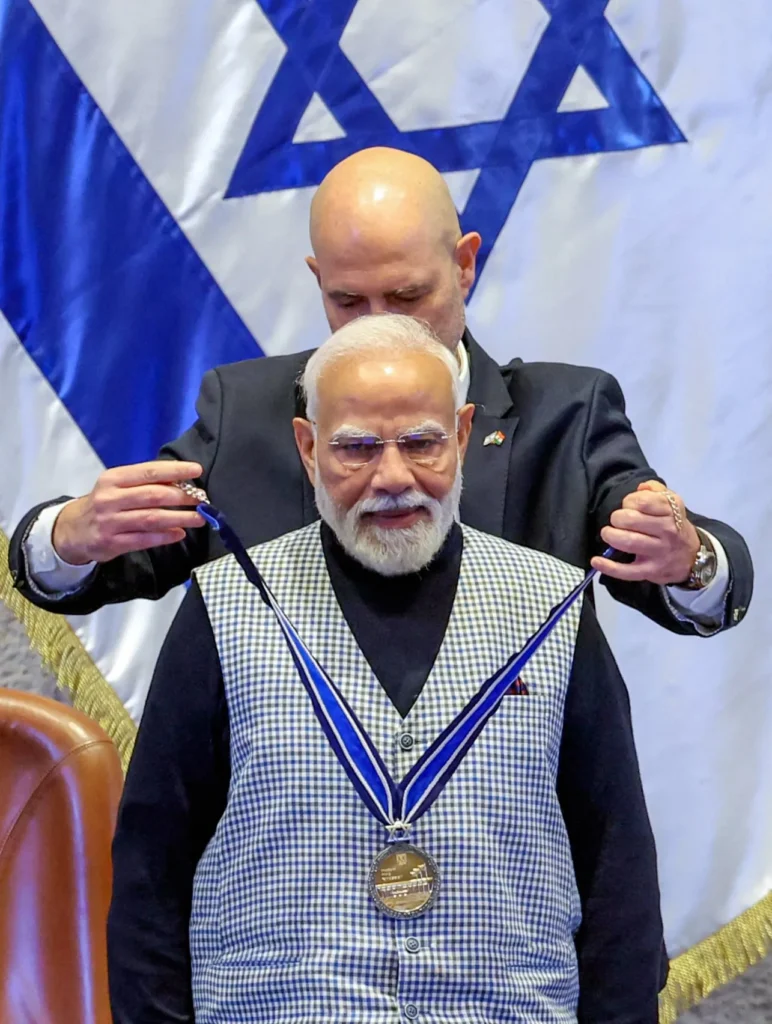
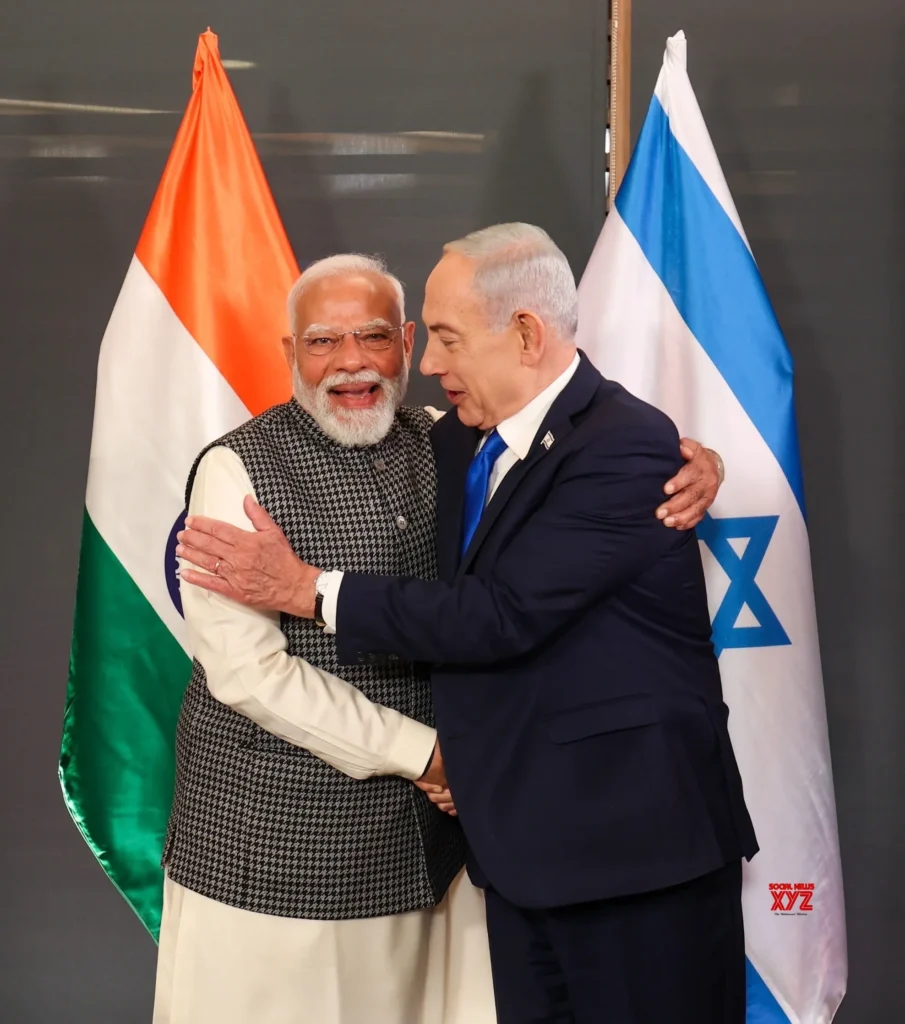
On February 25, 2026, Prime Minister Narendra Modi walked into the Knesset, the Israeli Parliament in Jerusalem, and did something no Indian Prime Minister had ever done, because no Indian Prime Minister had ever stood at that podium before.
He looked at the assembled lawmakers of a nation forged in the fire of history’s darkest chapter and said: “India stands with Israel. Firmly. With full conviction.”
He condemned the October 7 Hamas attacks as barbaric. He called terrorism by its name and not “militancy,” not “armed resistance,” not “complex geopolitical dynamics.” Terrorism. Barbarism. Evil.
And then the reactions started pouring in.
The opposition back home erupted. International commentators furrowed their brows. Editorials began with phrases like “India’s dangerous pivot” and “Modi’s controversial stance.” Social media is filled with warnings about Arab sentiment, Palestinian solidarity, and India’s “betrayal” of the Global South.
And all of it, every single word of outrage, proved exactly why this visit was necessary.
Terrorism — India Knows What It Looks Like
Let me ask you something that the sophisticated analysts and the balanced commentators will never ask.
Where was the world on December 13, 2001?
That was the day terrorists stormed the Indian Parliament. Five gunmen. Fourteen dead. The heart of Indian democracy nearly brought to its knees. The world offered condolences. Passed resolutions. Expressed deep concern. And moved on.
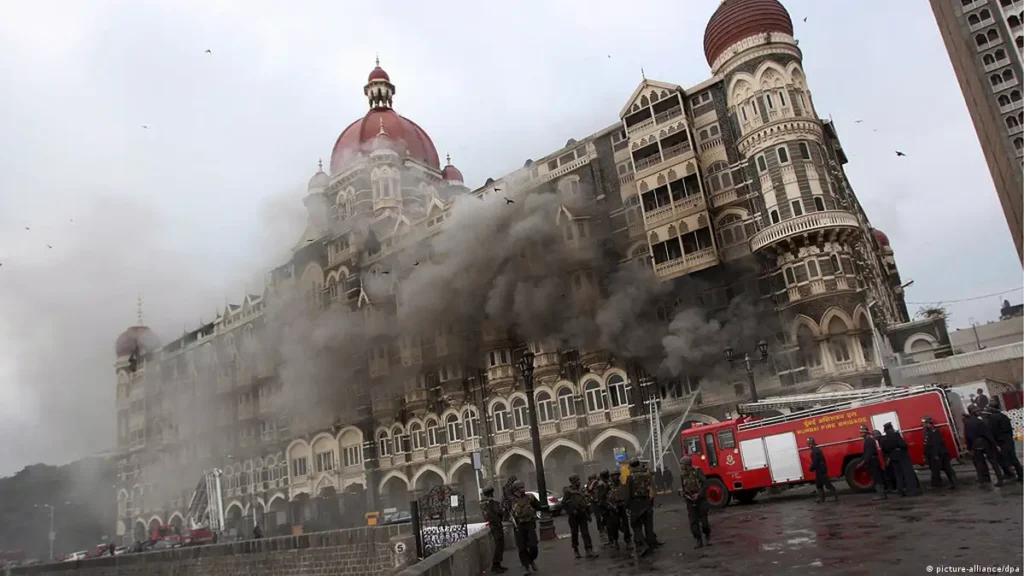
Where was the world on November 26, 2008?
That was Mumbai. Ten gunmen. 166 people dead across the Taj Hotel, Chhatrapati Shivaji Terminus, Nariman House, and Leopold Cafe. India presented Pakistan with evidence so detailed, so damning, so irrefutable that any honest court in the world would have convicted within a week. The world held meetings. Issued statements. Urged restraint from the country that had just buried 166 of its citizens.
Where was the world for thirty years of cross-border terrorism bleeding Kashmir, or where was moral clarity then? Where were the urgent UN resolutions? And where were the sanctions on the state’s sponsors of that violence?
Silence. Calibrated, diplomatic, strategically convenient silence.
So, when Modi stands in the Knesset and calls October 7 barbaric — he is not reading from a diplomatic script. He is speaking from scar tissue. He is speaking on behalf of every Indian family that buried someone and then watched the world shrug.
India doesn’t need a lecture on the horror of terrorism. India has lived it.
And that shared knowledge — that bone-deep understanding of what it means to be targeted simply for existing — is the foundation on which the India-Israel relationship now stands. Not just trade. Not just technology. Something more fundamental: the solidarity of nations that have refused to be destroyed.
Trade — This Is Also About Power
Sentiment matters. But strategy matters more.
And make no mistake, this visit is as much about India’s future as it is about India’s values.
Let’s start with the numbers. Bilateral trade between India and Israel has exploded from a mere $200 million in 1992 to $6.5 billion in 2024. India is already Israel’s largest arms customer. And now — timed with the precision of a chess grandmaster — the first round of Free Trade Agreement negotiations launched on February 23, just two days before Modi’s arrival.
That is not a coincidence. That is choreography. Deliberate, purposeful, and enormously consequential.
What does this FTA mean in practice? It means Indian companies get preferential access to one of the world’s most innovation-dense economies, which means Israeli expertise in agriculture, water management, cybersecurity, and defence flows into India at scale. It means the partnership moves from a transactional to a structural model. From buyer-seller to equals building together.
And the Gulf card that critics keep playing? Let’s put it to rest.
The Abraham Accords of 2020 rewrote West Asian geopolitics permanently. The UAE, Bahrain, Sudan, and Morocco normalised relations with Israel not under pressure but out of pure strategic self-interest. Saudi Arabia was heading the same way before October 7 complicated the timeline. These nations are not sitting in solidarity with Palestine, waiting for India to choose a side. They are signing technology deals with Israeli companies themselves.
The old script is shredded. India reads the new map. And it is acting accordingly.
T-3: Technology — The Real Game Change
This is where the visit becomes truly historic.
Reports suggest a new classified defence framework is being negotiated, one that opens the door for India to access previously restricted Israeli military hardware. The Iron Beam laser weapons system. Potentially, elements of Iron Dome technology, manufactured locally in India under transfer-of-technology agreements.
Think about what that means. India faces threats on two active borders simultaneously. It now stands to gain access to the most battle-tested point-defence systems on the planet — systems proven not in laboratories but against real rockets in real conflicts. And India doesn’t just want to buy them. India wants to build them. Right here. Under Make in India.
That is not a defence purchase. That is a defence revolution.
Beyond weapons, the technology agreements span Artificial Intelligence, quantum computing, and cybersecurity — sectors where Israel is almost freakishly dominant for its size. A nation of nine million people that has produced more cybersecurity unicorns than most continents. A startup ecosystem so dense that Tel Aviv consistently ranks among the top five tech cities in the world.
India brings engineering talent, market scale, and manufacturing ambition. Israel brings innovation intensity, R&D depth, and battle-tested solutions. That combination should make Beijing deeply uncomfortable. It should make Rawalpindi lose sleep.
The Critics Are Missing the Bigger Picture
Let’s address the domestic opposition because their criticism, while politically motivated, deserves an honest answer.
The argument goes: India has historically championed Palestinian rights. India was the first non-Arab nation to recognize the PLO. Nehru’s India stood with the oppressed and the colonized. How can Modi abandon this legacy?
It’s a fair point to raise. It is not a fair characterization of what is happening.
India has not abandoned the Palestinian people. India still supports a two-state solution. Just days before this visit, India joined over 100 nations condemning Israel’s West Bank expansion at the UN. That position has not changed.
What India has abandoned is the performance of solidarity, the ritual condemnation at multilateral forums that cost India nothing and achieved nothing for Palestinians either.
Did decades of careful balancing bring peace to Gaza? Did it build a single school in the West Bank? Or did it secure one concession from any party?
No. It kept India in everyone’s good books and changed absolutely nothing on the ground.
Meanwhile, Israel was becoming one of the most technologically advanced nations on earth — in exactly the sectors India needs most. The choice India is making now is not between values and interests. It is between performing values for an international audience and actually advancing interests that will improve the lives of 1.4 billion people.
That is not a betrayal of India’s legacy. That is a maturation of it.
This Is What a Rising Power Looks Like
Step back. Look at the full picture.
In the last twelve months, India has signed a Bilateral Investment Treaty with Israel, deepened defence ties with the US through the iCET framework, continued buying Russian crude despite Western pressure, strengthened the Quad, signed strategic agreements with the UAE, and now delivered the first-ever Indian Prime Ministerial address to the Knesset.
The ideological purists hate this. The left says India is becoming America’s junior partner. The right says India isn’t aggressive enough with China. The liberals say India is betraying Palestine. The conservatives say India is too soft on Pakistan.
Everyone is unhappy. And that might be the best sign yet that India is finally doing something right.
Because a nation genuinely exercising independent strategic judgment will always make somebody unhappy. The only nations that make nobody unhappy are the ones that do nothing.
India is done doing nothing.

Pingback: Leadership in Crisis: 5 Lessons the UAE Taught the World - Soch Sutra